

When it comes to healthy snacking, small changes can make a big difference. Dry fruits, nuts and seeds are easy to store, convenient to eat and packed with nutrients such as healthy fats, fibre, protein, vitamins, minerals and antioxidants.
While there is no single food that can provide everything your body needs, adding a variety of nutrient-rich foods to a balanced diet can support overall health. Nuts and seeds, in particular, are recognised as nutrient-dense foods containing healthy fats, fibre and plant-based protein.
Here are 7 everyday superfoods you can easily include in your meals and snacks.
1. Almonds – A Simple Everyday Snack
Almonds are a convenient source of healthy fats, fibre, protein, vitamin E and minerals. Their combination of protein, fibre and fat can also help you feel satisfied between meals.
How to enjoy almonds
- Eat a small handful as a snack
- Add chopped almonds to oatmeal or breakfast bowls
- Mix them with other nuts and seeds
- Use them as a topping for salads or yoghurt
For everyday snacking, choose plain or unsalted almonds and keep portions moderate.
2. Walnuts – Rich in Plant-Based Omega-3
Walnuts stand out among nuts because they provide alpha-linolenic acid (ALA), a plant-based omega-3 fatty acid, along with antioxidants and other nutrients.
They make an easy addition to a balanced diet and can add a satisfying crunch to everyday meals.
Easy ways to eat walnuts
- Add them to overnight oats
- Mix them into homemade trail mix
- Sprinkle chopped walnuts over salads
- Enjoy them with fresh fruit
A few walnuts can turn a simple snack into a more nutrient-dense combination.
3. Chia Seeds – Tiny Seeds, Plenty of Fibre
Chia seeds may be tiny, but they are packed with nutrients. A 28-gram serving provides nearly 10 grams of fibre, along with plant-based omega-3 ALA, protein and minerals.
Because chia seeds absorb liquid and develop a gel-like texture, they are particularly versatile.
Try chia seeds in:
- Overnight oats
- Smoothies
- Chia pudding
- Yoghurt
- Homemade energy bites
If you are increasing your fibre intake, introduce high-fibre foods gradually and drink enough fluids.
4. Pumpkin Seeds – A Crunchy Nutrient Boost
Pumpkin seeds are a convenient source of healthy fats, plant-based protein, fibre and minerals. Seeds as a group can contribute useful nutrients to a balanced diet and are easy to add to everyday meals.
Simple ways to include pumpkin seeds
- Sprinkle them over salads
- Add them to soups
- Mix them into homemade granola
- Add them to trail mixes
- Enjoy a small portion as a snack
Choose unsalted or lightly roasted pumpkin seeds when possible.
5. Dates – Naturally Sweet Energy
Dates are naturally sweet dried fruits that provide fibre, minerals and antioxidants. They can also be used as a natural sweetener in recipes.
Because dried fruits are concentrated sources of calories and natural sugars, portion size matters.
Enjoy dates by:
- Pairing them with nuts
- Chopping them into oatmeal
- Adding them to smoothies
- Blending them into homemade energy balls
- Using them to naturally sweeten certain recipes
A date-and-nut combination can be a convenient snack when you want something naturally sweet and satisfying.
6. Raisins – Convenient Fruit in a Small Package
Raisins are dried grapes that offer a convenient way to add fruit to your meals. Their naturally sweet flavour makes them particularly useful in breakfast dishes and homemade snack mixes.
Add raisins to:
- Oatmeal
- Breakfast cereals
- Trail mix
- Homemade granola
- Salads
- Rice or grain-based dishes
When buying dried fruit, check the ingredient list and look for options without unnecessary added sugar or additives.
7. Cashews – Creamy, Crunchy and Versatile
Cashews are nutrient-dense nuts containing healthy fats, protein, fibre, vitamins and minerals. Like other nuts, they can be a convenient part of a balanced eating pattern when enjoyed in sensible portions.
Their naturally creamy texture also makes them useful beyond snacking.
Try cashews in:
- Stir-fries
- Salads
- Homemade trail mix
- Breakfast bowls
- Nut-based sauces
- As a simple snack
For everyday consumption, plain or lightly roasted cashews are a practical choice.
How to Build a Healthy Dry Fruit & Nut Mix
You don’t need to eat every food on this list every day. Instead, create a simple mix based on your preferences.
For example:
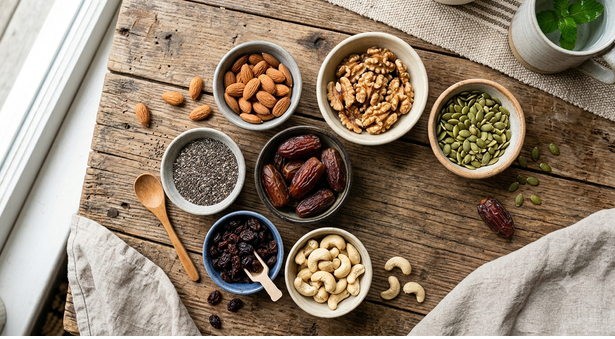
Almonds + Walnuts + Pumpkin Seeds + Raisins + a few Dates
You can portion the mix into small containers so you have a convenient snack ready when needed. MyPlate also recommends preparing portioned snacks such as nuts, seeds and dried fruit for convenient eating.
A simple rule to remember:
Nuts + Seeds + Dried Fruit = Variety + Convenience + Nutrients
The key is moderation. Nuts and dried fruits are nutrient-dense, but they can also be calorie-dense, so a small portion can go a long way.
Why Add Dry Fruits, Nuts and Seeds to Your Everyday Diet?
Including different nuts, seeds and dried fruits can help you add variety to your diet while providing important nutrients.
They can contribute:
- Healthy fats from nuts and seeds
- Plant-based protein from nuts and seeds
- Fibre from nuts, seeds and dried fruits
- Antioxidants and plant compounds
- Essential vitamins and minerals
- Convenient, portable snacking
The bigger picture matters, though. These foods work best as part of an overall diet that also includes vegetables, fruits, whole grains and quality protein sources.
Frequently Asked Questions
1. Which dry fruits are best for daily consumption?
Almonds, walnuts, dates and raisins can all be included in a balanced diet. The best choice depends on your nutritional needs, preferences and overall diet. Variety is more important than relying on one particular food.
2. How many nuts should I eat per day?
A small handful is a practical general portion for nuts. Since nuts are energy-dense, eating moderate portions is preferable to consuming large quantities.
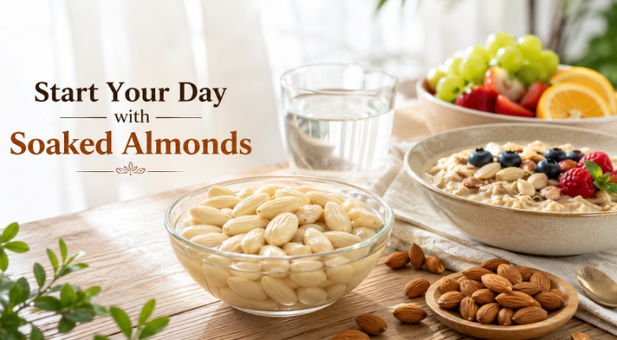
3. Should I soak almonds before eating them?
Soaking almonds is a common dietary practice, but it is not essential for everyone. You can eat almonds raw or roasted depending on your preference.
4. Are dry fruits healthy?
Yes. Dried fruits can provide fibre and other nutrients, but the drying process makes them more concentrated in calories and natural sugars. Enjoy them in moderate portions and check labels for added sugars.
5. Can I eat nuts and seeds every day?
For most people, nuts and seeds can be part of a healthy everyday diet. Choose a variety and favour unsalted options while keeping portions reasonable.
6. Which is better: nuts or dried fruits?
They serve different nutritional purposes. Nuts generally provide more healthy fats and protein, while dried fruits provide carbohydrates, fibre and naturally occurring sugars. Combining small portions of both can make a balanced snack.
7. What is the best time to eat dry fruits and nuts?
There is no single “best” time. They can be enjoyed at breakfast, as a mid-day snack, or incorporated into meals. What matters most is the overall quality and balance of your diet.
Final Takeaway
Healthy eating doesn’t have to be complicated.
A small portion of almonds, walnuts, cashews, seeds or dried fruit can easily fit into your everyday routine. The goal isn’t to find one magical “superfood” but to build a varied, balanced diet filled with nutrient-rich foods.
Start with a few favourites, mix them up and make healthy snacking a simple everyday habit.