

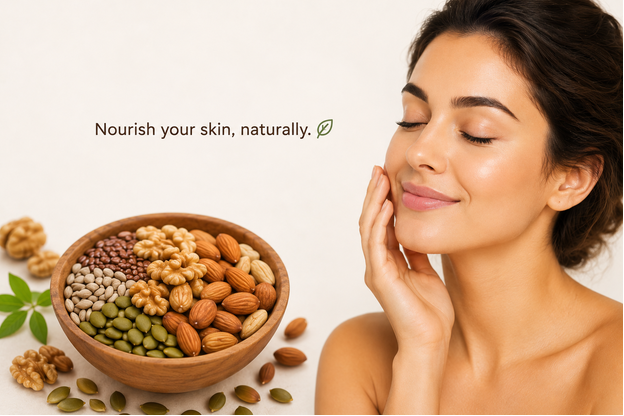
When it comes to healthy, glowing skin, skincare products often get most of the attention. However, what you eat can play an equally important role in supporting your skin’s health. Your skin is the body’s largest organ, and it requires a variety of nutrients to maintain its structure, hydration, and natural radiance.
Among the many foods that support skin health, nuts and seeds stand out as nutrient-dense powerhouses. Packed with healthy fats, vitamin E, zinc, and antioxidants, they provide essential nutrients that help nourish your skin from within.
The Role of Healthy Fats in Skin Health
Healthy fats are crucial for maintaining the skin’s natural barrier. This protective layer helps retain moisture and shields the skin from environmental stressors such as pollution and harsh weather.
Nuts like almonds, walnuts, and cashews, along with seeds such as flaxseeds, chia seeds, and sunflower seeds, contain beneficial fats that support skin hydration. When your skin receives adequate healthy fats, it tends to appear smoother, softer, and more supple.
Omega-3 fatty acids found in walnuts, flaxseeds, and chia seeds may also help support the skin’s natural balance and reduce dryness.
Vitamin E: Nature’s Skin Protector
Vitamin E is one of the most important nutrients for skin health. It acts as a powerful antioxidant that helps protect skin cells from oxidative stress caused by free radicals.
Almonds and sunflower seeds are particularly rich sources of vitamin E. Regular consumption of foods containing vitamin E may help support healthy skin by protecting cells from damage and promoting a more youthful appearance.
Since vitamin E is fat-soluble, the healthy fats naturally present in nuts and seeds help improve its absorption in the body.
Zinc and Skin Repair
Zinc is an essential mineral involved in skin growth, repair, and maintenance. It supports the body’s natural healing processes and contributes to healthy skin function.
Pumpkin seeds, sesame seeds, cashews, and almonds provide valuable amounts of zinc. Adequate zinc intake helps ensure that skin cells can renew themselves effectively and maintain overall skin integrity.
Zinc also plays a role in supporting the immune system, which contributes to healthy skin from within.
Antioxidants: Fighting Everyday Skin Stress
Every day, your skin is exposed to factors such as sunlight, pollution, and environmental stress. These factors can generate free radicals, unstable molecules that may damage skin cells over time.
Nuts and seeds contain a variety of antioxidants, including vitamin E, polyphenols, and selenium. These compounds help neutralize free radicals and support the body’s natural defense systems.
By including antioxidant-rich foods in your diet, you can help support long-term skin health and maintain a healthy complexion.
Easy Ways to Add Nuts and Seeds to Your Diet
Incorporating nuts and seeds into your daily routine is simple:
- Add almonds and walnuts to your breakfast.
- Sprinkle chia or flaxseeds over yogurt and smoothies.
- Mix sunflower and pumpkin seeds into salads.
- Enjoy a handful of mixed nuts as a nutritious snack.
- Use crushed nuts and seeds as toppings for healthy desserts.
Remember that consistency matters more than quantity. A balanced diet that regularly includes nutrient-rich foods can support healthier skin over time.
Final Thoughts
Healthy skin is influenced by many factors, including genetics, lifestyle, hydration, and nutrition. While no single food can guarantee perfect skin, nuts and seeds provide a valuable combination of healthy fats, vitamin E, zinc, and antioxidants that help support skin health from within.
Adding a variety of nuts and seeds to a balanced diet is a simple and delicious way to nourish your body—and your skin.
FAQs
Q1. Can eating nuts really improve skin health?
Yes. Nuts provide healthy fats, vitamin E, zinc, and antioxidants that support skin hydration, protection, and overall health.
Q2. Which nuts are best for glowing skin?
Almonds, walnuts, cashews, and pistachios are excellent choices because they contain nutrients that support healthy skin function.
Q3. Which seeds are beneficial for skin health?
Chia seeds, flaxseeds, sunflower seeds, pumpkin seeds, and sesame seeds are rich in nutrients that contribute to skin wellness.
Q4. How much nuts and seeds should I eat daily?
A small handful of mixed nuts and seeds per day is generally a practical way to include these nutrient-rich foods in a balanced diet.
Q5. Is vitamin E important for skin health?
Yes. Vitamin E acts as an antioxidant that helps protect skin cells from oxidative stress and supports overall skin health.
Q6. Can nuts and seeds replace skincare products?
No. A healthy diet complements a good skincare routine, but both nutrition and proper skincare contribute to maintaining healthy skin.
Q7. How long does it take to see benefits from dietary changes?
Results vary from person to person. Consistently following a balanced diet over weeks and months can contribute to overall skin health.