

Janmashtami is a celebration of devotion, tradition and the birth of Lord Krishna. From beautifully decorated temples to bhajans and festive fasting, food plays an important role in the celebrations. Janmashtami prasad can be made even more nourishing by incorporating wholesome dry fruits such as almonds, cashews, pistachios, raisins and dates. These ingredients add natural sweetness, crunch and richness while keeping the festive offerings delicious and wholesome.
Panchamrit: The Sacred Janmashtami Prasad
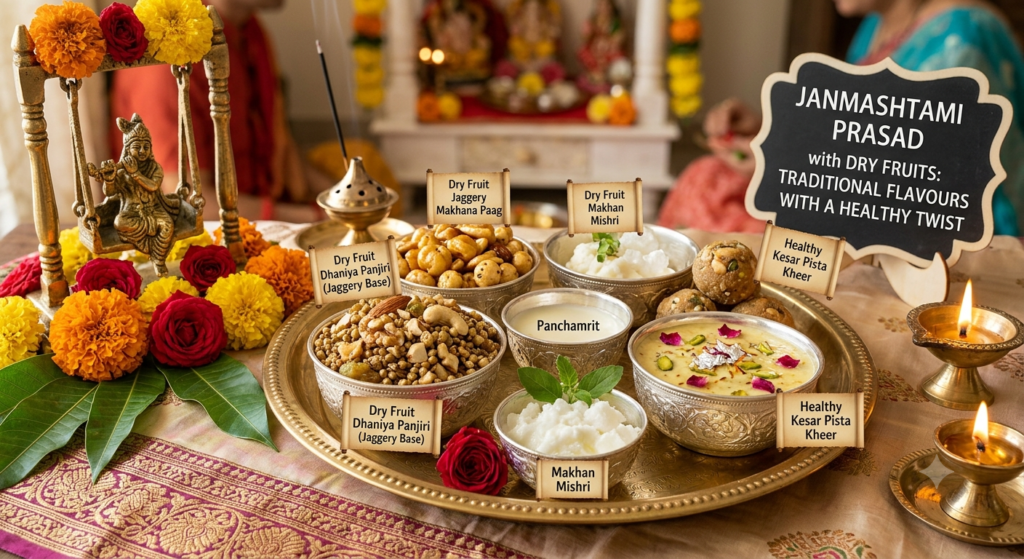
One of the most traditional offerings associated with Krishna Janmashtami is Panchamrit, also known as Charanamrit. The word Panchamrit means “five nectars” and traditionally combines five ingredients—milk, curd, ghee, honey and sugar.
For a dry-fruit-inspired version, finely chopped almonds, pistachios, cashews or raisins can be added in a small quantity for texture and flavour, depending on family or regional traditions.
How to Make Panchamrit
Ingredients:
- ½ cup milk
- ¼ cup fresh curd
- 1 teaspoon ghee
- 1 teaspoon honey
- 1 teaspoon sugar or jaggery
- 1 tablespoon finely chopped mixed dry fruits
- A few strands of saffron, optional
- 1 teaspoon grated coconut, optional
Method:
- Add milk and fresh curd to a clean bowl and gently mix.
- Add ghee, honey and sugar or jaggery.
- Mix until the ingredients are well combined.
- Add finely chopped almonds, cashews, pistachios or raisins.
- Add a few saffron strands if desired.
- Serve fresh as Janmashtami prasad.
Tip: If Panchamrit is being prepared specifically for religious offering, follow your family’s traditional recipe and customs. Dry fruits can be offered separately if that is the preferred tradition.
Dry-Fruit Prasad Ideas for Janmashtami
Panchamrit is just one option. Dry fruits can be used to create several festive prasad dishes.
1. Dry Fruit Ladoo
Blend dates, almonds, cashews and pistachios with a little coconut to make naturally sweet ladoos. These are easy to prepare and require minimal ingredients.
2. Makhana & Dry Fruit Prasad
Roasted makhana combined with cashews, almonds and raisins makes a crunchy festive snack. For vrat-friendly preparation, use ingredients permitted by your family’s fasting tradition.
3. Dry Fruit Barfi
A rich barfi made with cashews, almonds, pistachios and dates can be prepared without relying heavily on refined sugar.
4. Date & Nut Bites
Dates can act as a natural binding ingredient for a simple mixture of nuts and seeds. Shape the mixture into small bite-sized balls for an easy-to-serve prasad.
5. Dry Fruit Kheer
Milk-based kheer enriched with chopped almonds, cashews, pistachios and raisins makes a comforting festive offering.
Why Add Dry Fruits to Festive Prasad?
Dry fruits are naturally rich in nutrients and can add healthy fats, fibre, protein and micronutrients to festive recipes. They also provide natural sweetness and texture, making them versatile ingredients for traditional sweets and snacks.
Instead of making every festive dish heavily dependent on refined sugar, ingredients such as dates, raisins and figs can be used to bring natural sweetness to selected recipes.
Celebrate Janmashtami with Tradition & Taste
Janmashtami is about more than food—it is about celebrating faith, family and togetherness. Traditional offerings such as Panchamrit hold a special cultural and spiritual significance, while dry-fruit-based recipes offer a delicious way to add variety to the festive table.
Whether you prepare Panchamrit, dry-fruit ladoos, kheer, barfi or nut-and-date bites, the most important ingredient is the devotion with which the prasad is prepared and shared.
Frequently Asked Questions
1. What is Panchamrit made of?
Traditional Panchamrit is made using five ingredients: milk, curd, ghee, honey and sugar. Recipes may vary between families and regions.
2. Can dry fruits be added to Panchamrit?
Yes. Chopped almonds, cashews, pistachios or raisins can be added for flavour and texture, provided they fit your family’s traditional recipe.
3. What dry fruits are best for Janmashtami prasad?
Almonds, cashews, pistachios, raisins, dates and figs are popular choices for preparing festive sweets and snacks.
4. Can dates be used instead of sugar in prasad?
Dates can be used as a natural sweetening ingredient in many dry-fruit recipes. However, for traditional offerings such as Panchamrit, follow the customary ingredients used by your family or tradition.
5. What are some easy dry-fruit prasad recipes?
Dry-fruit ladoos, date-and-nut bites, dry-fruit barfi, makhana with nuts and dry-fruit kheer are simple festive options.
6. Is Panchamrit served only during Janmashtami?
No. Panchamrit is traditionally used in several Hindu religious rituals and ceremonies. It is especially associated with offerings and abhishekam in many traditions.
7. How should Panchamrit be stored?
Because Panchamrit contains dairy ingredients, it is best prepared fresh and kept refrigerated if it needs to be stored briefly. Avoid leaving it at room temperature for extended periods.
8. Can dry fruits be offered separately as prasad?
Yes. Dry fruits can also be arranged as a simple offering or incorporated into traditional sweets, depending on family and temple customs.
This Janmashtami, bring together the goodness of dry fruits and the richness of tradition to create prasad that is delicious, wholesome and made with devotion.