


Indian culinary history is filled with elaborate dishes, aromatic spices and recipes that reflect the grandeur of royal kitchens. While biryani, kebabs and rich gravies continue to enjoy widespread popularity, many lesser-known preparations deserve a place in today’s kitchens, too.
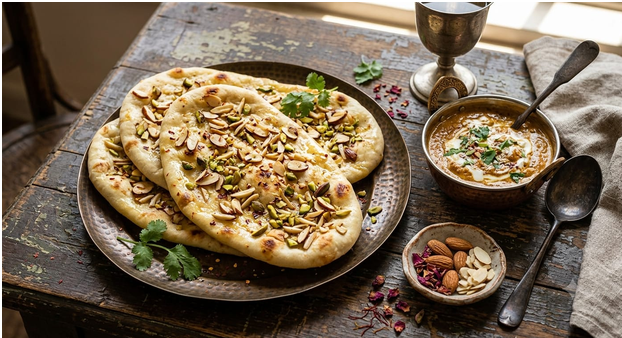
One such culinary inspiration is Naan-e-Badami, or almond bread. The name brings together naan, meaning bread, and badam, the Hindi and Urdu word for almonds. Inspired by the rich culinary traditions associated with Mughal-era cooking, this recipe celebrates the delicate flavour of almonds in a soft, lightly enriched bread.
Although historical recipes and their exact preparations can vary, this modern, home-friendly version offers a delicious way to explore the idea of Mughal almond bread.
What Is Naan-e-Badami?
Naan-e-Badami is a royal-inspired almond bread that combines the familiar comfort of Indian flatbread with the nutty richness of almonds.
Almonds have long featured in many celebrated Indian preparations, particularly rich gravies, desserts, festive sweets and dishes associated with elaborate feasts. Ground almonds can lend body and favour to food, while slivered almonds add a pleasant texture and elegant finish.
This recipe uses almond meal in the dough and sliced almonds as a topping. The result is a soft, mildly nutty flatbread that pairs well with creamy curries, vegetable korma or a simple cup of chai.
Ingredients for Naan-e-Badami
Preparation time: 15 minutes
Resting time: 30 minutes
Cooking time: 15–20 minutes
Servings: 4
Ingredients
- 2 cups all-purpose flour (maida)
- ¼ cup finely ground almonds or almond meal
- ¼ cup plain yoghurt
- 1 teaspoon sugar
- ½ teaspoon baking powder
- ¼ teaspoon baking soda
- ½ teaspoon salt, or to taste
- 1 tablespoon ghee or oil
- Approximately ½ cup lukewarm water, as needed
- 2 tablespoons sliced almonds
- 1 tablespoon melted ghee or butter for brushing
- A pinch of cardamom powder (optional)
How to Make Naan-e-Badami at Home
Step 1: Prepare the dough
In a large bowl, combine the flour, ground almonds, baking powder, baking soda, sugar and salt. Add the yoghurt and ghee, then gradually add lukewarm water until a soft, pliable dough forms.
Step 2: Knead and rest
Knead the dough for approximately 5–7 minutes until smooth. Cover and leave it to rest for 30 minutes. This helps the dough become easier to roll.
Step 3: Shape the naan
Divide the dough into four equal portions. Roll each portion into an oval or round flatbread on a lightly floured surface. Sprinkle sliced almonds over the top and gently press them into the dough.
Step 4: Cook until golden
Heat a heavy skillet or tawa over medium-high heat. Cook each naan until bubbles appear and the underside develops golden-brown spots. Flip and cook the other side until done. Adjust the heat as needed to prevent the almonds from burning.
For a more traditional tandoor-inspired finish, cook the naan in a suitable preheated oven using an appropriate baking method.
Step 5: Add the finishing touch
Brush the warm naan lightly with melted ghee or butter. Add a pinch of cardamom powder if desired, and serve immediately.
What Makes This Almond Bread Special?
The appeal of this almond bread recipe lies in its simple ingredients and rich flavour.
- Nutty flavour: Ground almonds add a gentle richness to the dough.
- Pleasant texture: Sliced almonds provide a delicate crunch.
- Versatile pairing: Enjoy it with creamy curries, vegetable dishes or mildly spiced gravies.
- A royal-inspired experience: It offers a way to explore the flavours associated with India’s elaborate culinary heritage at home.
Almonds also provide unsaturated fats, protein, fibre and vitamin E. However, the nutritional profile of the finished bread depends on the quantities used and the other ingredients in the recipe.
Tips for Perfect Naan-e-Badami
- Use finely ground almonds: A fine texture helps distribute the almonds evenly through the dough.
- Keep the dough soft: Add water gradually and avoid making the dough too stiff.
- Do not overload the topping: A light scattering of sliced almonds gives flavour without making the bread difficult to cook.
- Watch the heat: Almonds can brown quickly, so cook the naan carefully.
- Serve it fresh: The bread is best enjoyed warm, when its texture is soft and its aroma is most inviting.
What Can You Serve with Naan-e-Badami?
Naan-e-Badami works particularly well with creamy vegetable korma, paneer-based gravies, mild Mughlai-style curries and dal makhani. For a simpler meal, serve it with a lightly spiced vegetable curry.
You can also experiment with a lightly sweetened version, using a little cardamom and chopped almonds, for a festive bread-inspired treat. This would be a modern variation rather than a verified historical preparation.
Rediscover the Flavours of India’s Royal Kitchens
Forgotten recipes offer an opportunity to explore India’s culinary heritage through ingredients, techniques and flavours that continue to inspire modern cooking.
Naan-e-Badami is a delicious starting point for this journey. With flour, yoghurt, ghee and almonds, you can prepare a royal-inspired bread in your own kitchen and give an everyday meal a special touch.
At Sahyadri Nuts, we believe that ingredients such as almonds are more than pantry staples. They can be part of stories, traditions and recipes worth sharing across generations.
Try this Naan-e-Badami recipe at home and rediscover the pleasure of cooking with almonds.
Frequently Asked Questions
1. What is Naan-e-Badami?
Naan-e-Badami means almond bread and is presented here as a royal-inspired Indian flatbread made with ground and sliced almonds.
2. Is Naan-e-Badami a Mughal recipe?
The name and concept evoke Mughal culinary traditions, which included elaborate dishes featuring nuts. However, this particular recipe is a modern adaptation; its exact historical provenance has not been established here.
3. Can I make Naan-e-Badami without a tandoor?
Yes. A heavy skillet or tawa works well for this home-style version.
4. Can I use almond flour instead of ground almonds?
Yes. Finely ground almond flour can be used, provided it is made from almonds and does not contain added ingredients. The dough may need slight adjustments to its liquid content.
5. What should I serve with almond bread?
Pair it with vegetable korma, paneer gravies, dal makhani or other mildly spiced dishes.
6. Are almonds nutritious?
Almonds provide vitamin E, fibre, protein and unsaturated fats. The overall nutritional value of the bread depends on the complete recipe and serving size.
7. Can I prepare the dough in advance?
You can prepare the dough a few hours ahead and refrigerate it in a covered container. Bring it closer to room temperature before shaping, and cook the naan fresh for the best texture.
Explore more recipes using almonds and discover forgotten Indian royal recipes with Sahyadri Nuts.
