

Introduction
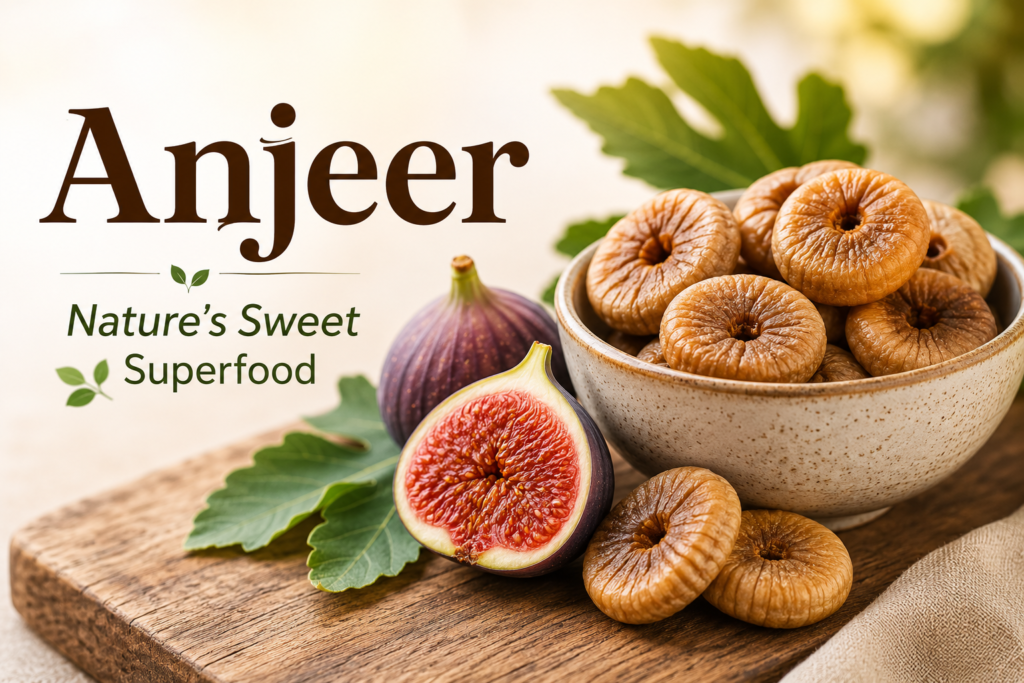
Anjeer, commonly known as fig, is one of the oldest cultivated fruits in the world. Revered for centuries for its natural sweetness and nutritional benefits, anjeer has become a staple in many Indian households. Whether enjoyed fresh, dried, soaked overnight, or blended into delicious recipes, this nutrient-rich fruit offers numerous health benefits.
With its naturally sweet flavor, impressive fiber content, and abundance of essential minerals, anjeer is often considered a superfood that supports overall wellness.
What is Anjeer?
Anjeer is the fruit of the Common Fig tree. While fresh figs are seasonal and delicate, dried anjeer is available year-round and is especially popular in India. Dried anjeer contains concentrated nutrients, making it an excellent addition to a balanced diet.
Nutritional Value of Anjeer
Just a few pieces of dried anjeer provide:
- Dietary fiber
- Calcium
- Potassium
- Magnesium
- Iron
- Antioxidants
- Natural sugars for energy
These nutrients help support digestion, bone health, and overall vitality.
7 Amazing Health Benefits of Anjeer
1. Supports Digestive Health
Anjeer is rich in dietary fiber, which helps promote healthy digestion and regular bowel movements. Soaked anjeer is particularly popular as a natural remedy for occasional constipation.
2. Good for Heart Health
The potassium in anjeer helps maintain healthy blood pressure levels. Combined with its fiber content, it may support cardiovascular wellness when included as part of a balanced diet.
3. Helps Maintain Bone Strength
Anjeer contains calcium, magnesium, and phosphorus—minerals that contribute to strong and healthy bones.
4. Provides Natural Energy
The natural sugars present in anjeer make it a quick and healthy energy source, making it ideal as a pre-workout snack or midday pick-me-up.
5. Rich in Antioxidants
Antioxidants help protect the body’s cells from oxidative stress caused by free radicals.
6. Supports Weight Management
The fiber in anjeer helps increase satiety, which may help reduce unnecessary snacking and overeating.
7. May Support Skin Health
The vitamins and antioxidants found in anjeer contribute to overall skin health and may help maintain a healthy glow.
Traditional Anjeer Milk Recipe
Ingredients
- 4–5 dried anjeer
- 2 cups milk
- 4 almonds
- 2 cashews
- 1 teaspoon honey (optional)
- A pinch of cardamom powder
Method
- Soak anjeer, almonds, and cashews overnight.
- Blend them into a smooth paste.
- Heat the milk in a saucepan.
- Add the prepared paste and simmer for 3–4 minutes.
- Stir in cardamom powder.
- Add honey if desired.
- Serve warm.
Why You’ll Love It
This traditional drink combines the goodness of anjeer, nuts, and milk into a nourishing beverage that’s perfect for breakfast or an evening snack.
Best Ways to Eat Anjeer
- Soaked overnight and eaten in the morning
- Added to smoothies
- Mixed into oatmeal
- Chopped into salads
- Used in energy balls and healthy desserts
- Blended into milkshakes
- Added to dry fruit mixes
Fresh Anjeer vs Dried Anjeer
| Fresh Anjeer | Dried Anjeer |
| Seasonal availability | Available year-round |
| Higher water content | Concentrated nutrients |
| Softer texture | Chewy texture |
| Lower calorie density | Higher energy content |
Both forms offer nutritional benefits and can be enjoyed as part of a healthy diet.
Final Thoughts
Anjeer is much more than a sweet dried fruit—it’s a nutritional powerhouse packed with fiber, minerals, antioxidants, and natural energy. Whether you enjoy it soaked, blended into milk, or added to your favorite recipes, incorporating anjeer into your diet is a delicious way to support overall health and wellness.
A handful of anjeer each day can be a simple step toward better nutrition, making this ancient fruit a timeless addition to modern healthy lifestyles.
Frequently Asked Questions (FAQs)
1. How many anjeers can I eat in a day?
Generally, 2–4 dried anjeers per day can be enjoyed as part of a balanced diet. Individual dietary needs may vary.
2. Is it better to eat soaked anjeer?
Many people prefer soaked anjeer because it becomes softer and easier to digest while retaining its nutritional value.
3. Can anjeer help with digestion?
Yes, anjeer is rich in fiber, which supports healthy digestion and regular bowel movements.
4. Is anjeer good for bone health?
Anjeer contains calcium and magnesium, minerals that contribute to maintaining healthy bones.
5. Can people with diabetes eat anjeer?
People with diabetes should monitor portion sizes and consult a healthcare professional regarding their specific dietary needs, as dried anjeer contains natural sugars.
6. When is the best time to eat anjeer?
Many people enjoy soaked anjeer in the morning, but it can also be consumed as a healthy snack throughout the day.
7. Does anjeer help with weight management?
Its fiber content can promote fullness and help manage hunger when included in a balanced diet.
8. Can children eat anjeer?
Yes, anjeer can be a nutritious snack for children when consumed in age-appropriate portions.